
Bleeding Gums When Brushing: Gum Disease Signs You Should Not Ignore
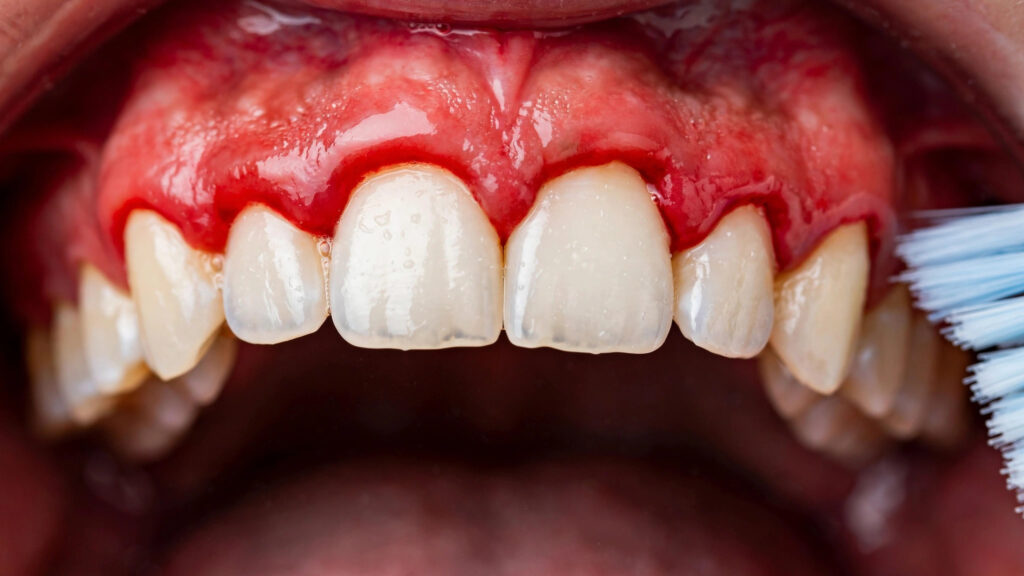
A little pink in the sink after brushing is easy to dismiss. Many people assume they brushed too hard or have sensitive gums, and carry on as normal. But bleeding gums when brushing are rarely normal, and are often the earliest visible sign that the gums are inflamed.
Healthy gums do not bleed from ordinary brushing or flossing. Regular bleeding usually means plaque has sat along the gumline long enough to irritate the tissue, even without pain. This guide explains the common causes, how to tell early gum disease from advanced disease, what treatment involves, what it costs in Bangladesh, and the warning signs that should not wait.
Why Gums Bleed When You Brush
Gums bleed because they are inflamed, and inflammation usually starts with plaque: the soft, sticky film of bacteria that forms on teeth every day, especially where the tooth meets the gum. If it is not removed by brushing and cleaning between the teeth, it hardens into tartar, which brushing at home cannot remove. Bacteria in plaque and tartar make the tissue swollen, tender, and more likely to bleed.
Bleeding often appears first around the back teeth, between crowded teeth, or along the lower front teeth, where plaque collects most easily. Gentle daily cleaning often reduces it within one to two weeks, as inflammation settles.
Brushing too hard can make bleeding worse, but it is rarely the whole story. A hard brush or scrubbing can injure the gum edge, especially if the gums are already inflamed. Switching to a soft brush helps, yet if bleeding continues after two weeks of careful cleaning, the cause is more likely plaque or tartar below the gumline.
Gingivitis vs Periodontitis: How to Tell the Difference
The early stage is called gingivitis. The gums are red, puffy, and bleed easily, but the bone and fibres holding the teeth in place are still intact. There is usually no pain or looseness, which is why it is so easy to ignore. The good news is that gingivitis is reversible: thorough cleaning, removal of tartar, and better daily care can return the gums to health.
Periodontitis is more advanced, and not reversible in the same way. Inflammation has spread deeper, forming pockets between teeth and gums where bacteria collect. Over time, supporting bone can be lost, gums may recede, and teeth may feel loose or shift. Bad breath that does not improve with brushing, a bad taste, pus around a tooth, or a tooth that feels longer can all point in this direction.
Smoking, diabetes, stress, and a weakened immune system can make gum disease progress faster. Smoking can even reduce bleeding while disease worsens, hiding a warning sign — one reason a dentist checks pocket depth and bone levels, not bleeding alone.
In short: bleeding alone, with firm teeth and no recession, usually suggests early, reversible disease. Bleeding plus recession, loose teeth, persistent bad breath, or pus suggests deeper disease.
Other Causes of Bleeding Gums
Plaque is the most common cause, but not the only one. Hormonal changes during pregnancy, puberty, or menopause can make gums more sensitive to plaque, so bleeding may increase even when brushing habits have not changed. Some medicines, including blood thinners and certain blood-pressure medicines, can increase bleeding or cause gum overgrowth that traps more plaque.
A diet low in vitamin C can also contribute, although a true deficiency is uncommon with a varied diet. Mouth breathing, a dry mouth, and teeth grinding can irritate the gums, as can a poorly fitting crown, filling, or denture that traps plaque at its edge. If bleeding always comes from the same tooth, especially around a crown or filling, tell your dentist, so the edge can be checked.
Bleeding alone does not prove a serious illness, nor mean treatment will be painful or expensive. Most cases start with a check-up, a cleaning, and better home care. What matters is getting the gums examined before early inflammation becomes deeper disease.
What a Dentist Checks for Bleeding Gums
A gum check is usually quick and painless. The dentist looks at the colour, shape, and firmness of the gums, notes where bleeding occurs, and measures pocket depth around each tooth with a small probe. Healthy pockets are shallow, usually one to three millimetres; deeper pockets suggest disease below the gumline. An X-ray may check bone levels if recession, looseness, or deep pockets are found.
Treatment then follows the findings. For early gingivitis, scaling and polishing, plus advice on brushing and interdental cleaning, are often enough. For deeper disease, deep root planing cleans the root surfaces below the gumline so the gums can reattach more tightly. A tooth with a deep pocket or abscess may need further gum treatment, which the dentist will explain before starting.
For what the first step usually involves, see the dental scaling cost guide. Removing tartar from the gumline is the step that lets inflamed gums settle.
Gum Treatment Cost in Bangladesh
Cost depends on how much tartar has built up, how deep the pockets are, and whether treatment is limited to a cleaning or needs deeper work. The table below shows generic Bangladesh market prices, checked against the live price list — not a fixed quote, since the final cost depends on an examination of your gums and bone levels. Items are listed separately and never added into one total here.
| Item | Generic market price (BDT) |
|---|---|
| General Consultation | ৳500 |
| Digital X-ray | ৳200 |
| Regular Scaling | ৳2,000 |
| Irregular Scaling | ৳3,000 |
| Teeth Polishing | ৳2,000 |
| Deep Root Planing | ৳2,500 |
| Gum Treatment | ৳5,000–৳8,000 |
| Night Guard | ৳10,000–৳15,000 |
A routine scaling and polish is the lowest-cost step, and it is often all that early bleeding needs. Deeper cleaning and gum treatment cost more because they treat disease below the gumline. For a full picture of how these treatments sit alongside other options, see the dental treatment price list before your visit. Treating gingivitis early is almost always cheaper than treating periodontitis later.
Daily Care That Actually Stops Bleeding
Good home care must reach the gumline and the spaces between teeth, where a brush alone cannot reach. Brush twice a day with a soft brush and fluoride toothpaste, using small circular movements along the gumline rather than hard scrubbing. Spend about two minutes, and do not skip the inside surfaces of the lower front teeth, where tartar builds fastest.
Clean between the teeth once a day with floss or interdental brushes, choosing the size that fits without forcing. At first, flossing inflamed gums may cause a little bleeding, but it should lessen within a week or two with gentle, consistent technique. If it does not, ask your dentist to check the area.
Rinse with water after meals when you cannot brush, and limit frequent sugary snacks and drinks, which feed plaque bacteria. Replace your brush head every three months, or sooner if the bristles splay. For smokers, quitting improves gum healing more than any mouthwash can.
Once the gums are healthy, the teeth whitening cost in Bangladesh guide is worth reading — whitening irritated gums can increase sensitivity.
When Bleeding Needs Urgent Attention
Most bleeding gums are not an emergency, but some signs should not wait. Seek prompt care if bleeding is heavy or does not stop, if there is swelling, pus, fever, or severe pain, or if a tooth suddenly feels loose — and likewise after an injury, or if you take blood thinners and notice unusual bruising elsewhere.
If you live in Mirpur-12 or elsewhere in Dhaka, do not wait months hoping the problem will settle on its own. Early gum disease often has no pain, so waiting for pain means waiting until the disease is more advanced. A short check-up can tell you whether you need only a cleaning, deeper treatment, or a change in technique.
Takeaway: Bleeding gums when brushing are a warning sign, not a normal part of brushing. In most cases the cause is plaque and tartar irritating the gumline, and early gingivitis can be reversed with scaling, polishing, and better daily cleaning. Bleeding plus receding gums, loose teeth, persistent bad breath, or pus points to deeper periodontitis that needs prompt treatment. As generic Bangladesh market prices, a consultation is typically ৳500, an X-ray ৳200, scaling ৳2,000–৳3,000, polishing ৳2,000, deep root planing ৳2,500, and gum treatment ৳5,000–৳8,000, each priced separately. If bleeding lasts more than two weeks despite gentle cleaning, or if any urgent sign appears, get your gums checked promptly.
Mirpur-12, Dhaka — 01676-347526